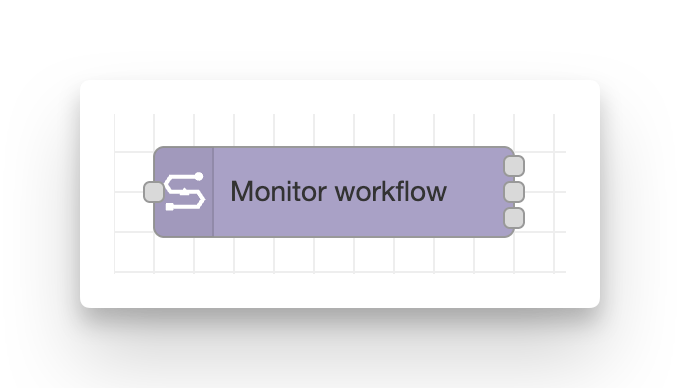
# Monitor workflow
**Poll the status of an existing workflow run until it reaches a terminal state.**
Trigger by passing an event message to the input handle. Typically this will include a workflow ID to track.
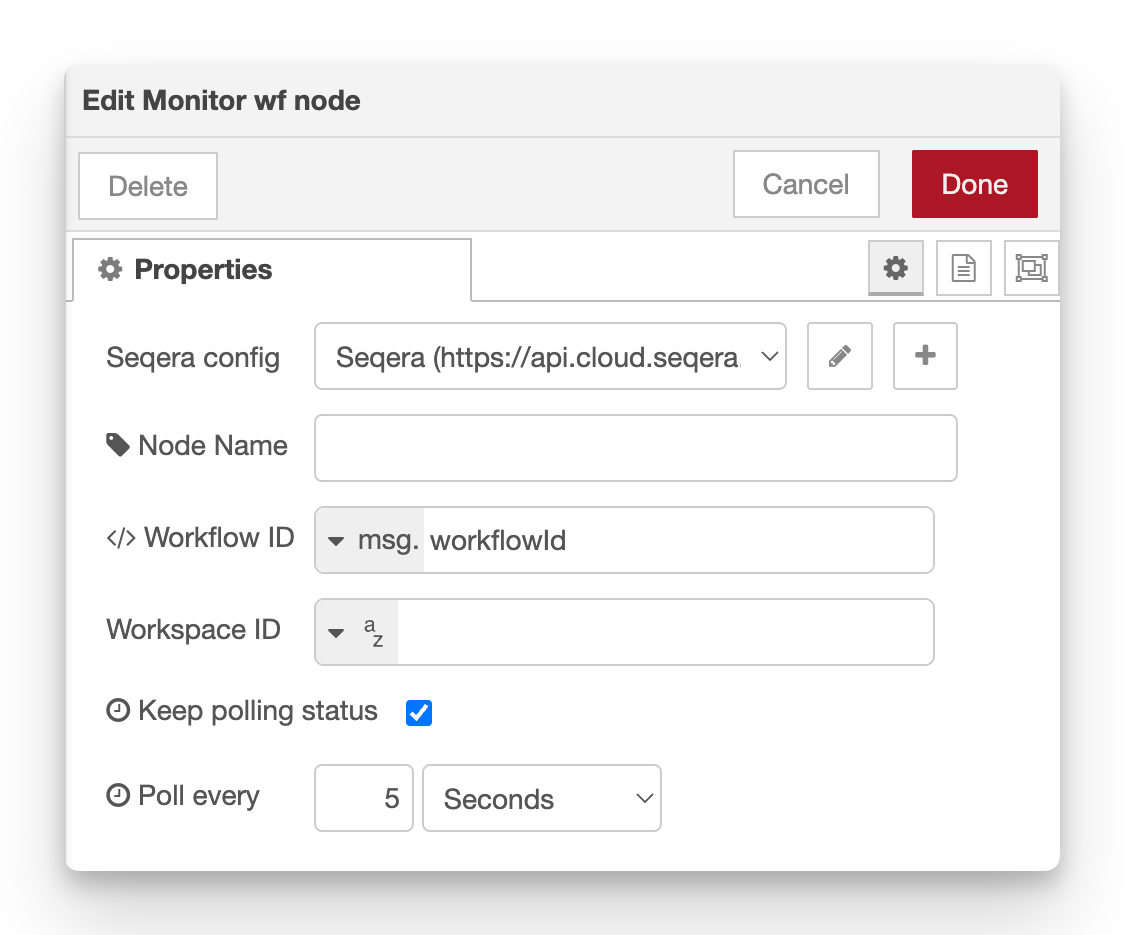
The config field Workflow ID defaults to `msg.workflowId` which is a default output name from the [launch workflow node](launch_workflow.md).
{ width=400}
{ width=600}
## Configuration
- **Seqera config**: Reference to the seqera-config node containing API credentials and default workspace settings.
- **Node name**: Optional custom name for the node in the editor.
- **Workflow ID** (required): ID of the workflow to monitor.
- Defaults to `msg.workflowId`, one of the outputs provided by the [launch workflow node](launch_workflow.md).
- **Workspace ID**: Override the workspace ID from the Config node.
- **Keep polling status** (default **true**): Continue polling until the workflow is finished.
- **Poll interview** (default **5 seconds**): Frequency of status checks.
## Outputs (three)
The monitor node has three separate outputs that fire at different times:
1. **Active**: Emitted on every poll while the workflow is in `submitted` or `running`.
2. **Succeeded**: Emitted once when the workflow reaches a success status (`succeeded`).
3. **Failed**: Emitted once for any terminal non-success status (`failed`, `cancelled`, `unknown`).
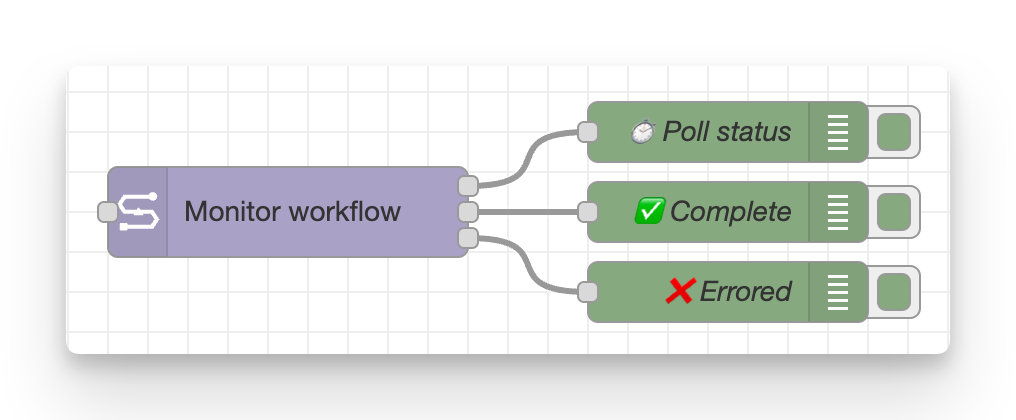
Each message contains:
- `msg.payload` (object): Full workflow object from the API.
- `msg.workflowId` (string): Convenience copy of the workflow ID.
## Required permissions
Minimum required role: **View**.
See the [configuration documentation](configuration.md#required-token-permissions) for a full table of required permissions for all nodes.
## Notes
- The monitor stops polling automatically when a terminal state is reached
- All three outputs preserve custom message properties from the input (e.g., `msg._context`)
- For long-running workflows, consider increasing the poll interval to reduce API calls