# mobx-vue
[](https://www.npmjs.com/package/mobx-vue)
[](https://codecov.io/gh/mobxjs/mobx-vue)
[](https://www.npmjs.com/package/mobx-vue)
[](https://travis-ci.org/mobxjs/mobx-vue)
Vue bindings for MobX, inspired by [mobx-react](https://github.com/mobxjs/mobx-react)
## Installation
```bash
npm i mobx-vue -S
```
or
```bash
yarn add mobx-vue
```
## Requirement
* Vue >= 2.0.0
* MobX >= 4.0.0, compatible with MobX 5!
## Why mobx-vue
MobX is an unopinionated, scalable state management, which can make our programming more intuitive.
Unlike the other vue-rx-inspired libraries which based on the plugin mechanism of vue, mobx-vue will be the simplest you ever meet. What you all need is to bind your state in component definition and observe it just like [mobx-react](https://github.com/mobxjs/mobx-react) does, then your component will react to your state changes automatically which managed by mobx.
And, the most important is that you can build a view-library-free application, if you wanna migrate to another view library(React/Angular) someday, rewrite the template and switch to the relevant mobx bindings([mobx-react](https://github.com/mobxjs/mobx-react),[mobx-angular](https://github.com/mobxjs/mobx-angular),[mobx-angularjs](https://github.com/mobxjs/mobx-angularjs)) is all you have to do.
### Articles:
* [Build A View-Framework-Free Data Layer Based on MobX — Integration With Vue](https://medium.com/@kuitos/build-a-view-framework-free-data-layer-based-on-mobx-integration-with-vue-1-8b524b86c7b8)
* [Why MobX + movue, instead of Vuex?](https://github.com/nighca/movue/issues/8)
* [基于 MobX 构建视图框架无关的数据层-与 Vue 的结合(1)](https://zhuanlan.zhihu.com/p/37736470)
## Usage
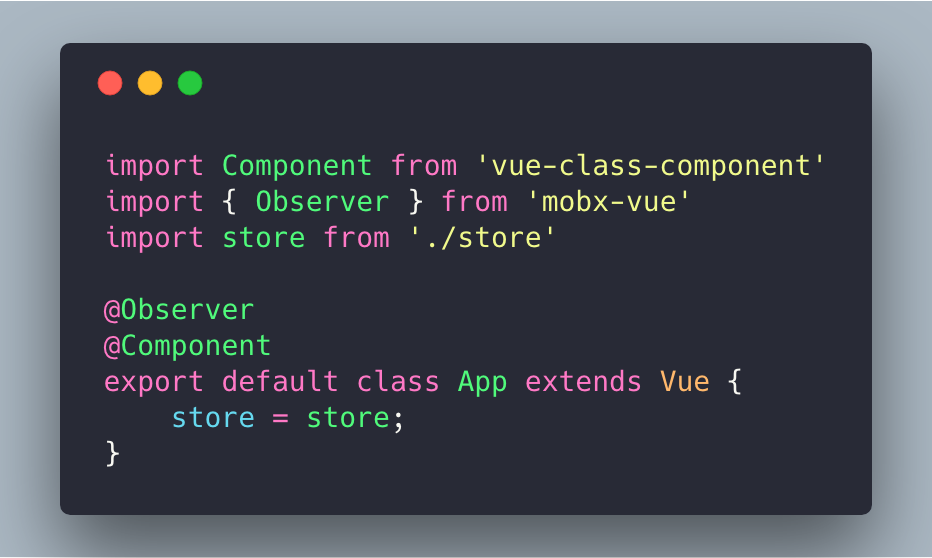
We highly recommend using the bindings with [vue-class-component](https://github.com/vuejs/vue-class-component) decorator, and define the Store/ViewModel independently.
```ts
import { action, computed, observable } from "mobx";
export default class ViewModel {
@observable age = 10;
@observable users = [];
@computed get computedAge() {
return this.age + 1;
}
@action.bound setAge() {
this.age++;
}
@action.bound async fetchUsers() {
this.users = await http.get('/users')
}
}
```
```vue
```
Or used with the traditional way:
```vue
```
All you need is to bind your state to component and observe it. No more reactive data definations in component.
## API
* connect(viewModel)(VueComponent | options): ExtendedVueComponent