[](https://github.com/suhaotian/xior/actions/workflows/check.yml)
[](https://bundlejs.com/?q=xior%400.7.7&treeshake=%5B%7B+default+%7D%5D)
[](https://www.npmjs.com/package/xior)


## Intro
A lite http request lib based on **fetch** with plugin support and similar API to axios.
**Features:**
- 🔥 Use **fetch**
- 🫡 **Similar axios API**: `axios.create` / `axios.interceptors` / `.get/post/put/patch/delete/head/options`
- 🤙 Supports timeout, canceling requests, and **nested query encoding**
- 🥷 Supports **plugins**: **error retry**, deduplication, throttling, **cache**, error cache, mock, and custom plugins
- 🚀 Lightweight (~6KB, Gzip ~3kb)
- 👊 Unit tested and strongly typed 💪
## Table of Contents
- [Intro](#intro)
- [Table of Contents](#table-of-contents)
- [Getting Started](#getting-started)
- [Installing](#installing)
- [Package manager](#package-manager)
- [Use CDN](#use-cdn)
- [Create instance](#create-instance)
- [GET / POST / DELETE / PUT / PATCH / OPTIONS / HEAD](#get--post--delete--put--patch--options--head)
- [Change default headers or params](#change-default-headers-or-params)
- [Get response headers](#get-response-headers)
- [Upload file](#upload-file)
- [Using interceptors](#using-interceptors)
- [Cleanup interceptors](#cleanup-interceptors)
- [Timeout and Cancel request](#timeout-and-cancel-request)
- [Proxy or use custom fetch implementations](#proxy-or-use-custom-fetch-implementations)
- [Custom data parser](#custom-data-parser)
- [Encrypt and Decrypt Example](#encrypt-and-decrypt-example)
- [Tips: Make your SSR(Server-side Rendering) app more stable and faster](#tips-make-your-ssrserver-side-rendering-app-more-stable-and-faster)
- [Plugins](#plugins)
- [Error retry plugin](#error-retry-plugin)
- [Request throttle plugin](#request-throttle-plugin)
- [Request dedupe plugin](#request-dedupe-plugin)
- [Error cache plugin](#error-cache-plugin)
- [Cache plugin](#cache-plugin)
- [Persist cache data](#persist-cache-data)
- [Upload and download progress plugin](#upload-and-download-progress-plugin)
- [Mock plugin](#mock-plugin)
- [Auth refresh token plugin(from community)](#auth-refresh-token-pluginfrom-community)
- [Auth refresh token plugin(built-in)](#auth-refresh-token-pluginbuilt-in)
- [Create your own custom plugin](#create-your-own-custom-plugin)
- [Cleanup plugins example](#cleanup-plugins-example)
- [Helper functions](#helper-functions)
- [FAQ](#faq)
- [1. Is **xior** 100% compatiable with `axios`?](#1-is-xior-100-compatiable-with-axios)
- [2. Can I use xior in projects like Bun, Expo, React Native, RemixJS, Next.js, Vue, Nuxt.js, Tauri or `NervJS/Taro`?](#2-can-i-use-xior-in-projects-like-bun-expo-react-native-remixjs-nextjs-vue-nuxtjs-tauri-or-nervjstaro)
- [3. How can I use custom fetch implementation or How to support **proxy** feature?](#3-how-can-i-use-custom-fetch-implementation-or-how-to-support-proxy-feature)
- [4. How do I handle responses with types like `'stream'`, `'document'`, `'arraybuffer'`, or `'blob'`?](#4-how-do-i-handle-responses-with-types-like-stream-document-arraybuffer-or-blob)
- [5. How do I support older browsers?](#5-how-do-i-support-older-browsers)
- [6. Why is xior named "xior"?](#6-why-is-xior-named-xior)
- [7. Where can I ask additional questions?](#7-where-can-i-ask-additional-questions)
- [Migrate from `axios` to **xior**](#migrate-from-axios-to-xior)
- [GET](#get)
- [POST](#post)
- [`axios(requestObj)`: axios({ method: 'get', params: { a: 1 } })](#axiosrequestobj-axios-method-get-params--a-1--)
- [Creating an instance](#creating-an-instance)
- [Get response headers](#get-response-headers-1)
- [Download file with `responseType: 'stream' | 'blob'`](#download-file-with-responsetype-stream--blob)
- [Use stream](#use-stream)
- [Migrate from `fetch` to **xior**](#migrate-from-fetch-to-xior)
- [GET](#get-1)
- [POST](#post-1)
- [Abort a fetch](#abort-a-fetch)
- [Sending a request with credentials included](#sending-a-request-with-credentials-included)
- [Uploading a file](#uploading-a-file)
- [Processing a text file line by line](#processing-a-text-file-line-by-line)
- [API Reference](#api-reference)
- [Star History](#star-history)
- [Thanks](#thanks)
## Getting Started
### Installing
#### Package manager
```sh
# npm
npm install xior
# pnpm
pnpm add xior
# bun
bun add xior
# yarn
yarn add xior
```
#### Use CDN
> Since v0.2.1, xior supports UMD format
Use jsDelivr CDN:
```html
```
Use unpkg CDN:
```html
```
### Create instance
```ts
import xior from 'xior';
export const xiorInstance = xior.create({
baseURL: 'https://apiexampledomain.com/api',
headers: {
// put your common custom headers here
},
});
```
### GET / POST / DELETE / PUT / PATCH / OPTIONS / HEAD
GET
> `HEAD` / `DELETE` / `OPTIONS` are same usage with `GET` method
```ts
async function run() {
const { data } = await xiorInstance.get('/');
// with params and support nested params
const { data: data2 } = await xiorInstance.get('/', { params: { a: 1, b: 2, c: { d: 1 } } });
// with headers
const { data: data3 } = await xiorInstance.get('/', {
params: { a: 1, b: 2 },
headers: {
'content-type': 'application/x-www-form-urlencoded',
},
});
// types
const { data: data4 } = await xiorInstance.get<{ field1: string; field2: number }>('/');
}
```
POST
> `PUT`/`PATCH` methods are same usage with `POST`
```ts
async function run() {
const { data: data3 } = await xiorInstance.post<{ field1: string; field2: number }>(
'/',
{ a: 1, b: '2' },
{
params: { id: 1 },
headers: {},
}
);
}
```
### Change default headers or params
```ts
import xior from 'xior';
export const xiorInstance = xior.create({
baseURL: 'https://apiexampledomain.com/api',
});
function setAccessToken(token: string) {
// xiorInstance.defaults.params['x'] = 1;
xiorInstance.defaults.headers['Authorization'] = `Bearer ${token}`;
}
function removeUserToken() {
// delete xiorInstance.defaults.params['x'];
delete xiorInstance.defaults.headers['Authorization'];
}
```
### Get response headers
```ts
import xior from 'xior';
const xiorInstance = xior.create({
baseURL: 'https://apiexampledomain.com/api',
});
const { data, headers } = await xiorInstance.get('/');
console.log(headers.get('X-Header-Name'));
```
### Upload file
**xior** supports file uploads using the `FormData` API and provides an optional `'xior/plugins/progress'` plugin for simulating upload progress, usage similar to Axios.
```ts
import Xior from 'xior';
import uploadDownloadProgressPlugin from 'xior/plugins/progress';
const http = Xior.create({});
http.plugins.use(
uploadDownloadProgressPlugin({
progressDuration: 5 * 1000,
})
);
const formData = FormData();
formData.append('file', fileObject);
formData.append('field1', 'val1');
formData.append('field2', 'val2');
http.post('/upload', formData, {
onUploadProgress(e) {
console.log(`Upload progress: ${e.progress}%`);
},
// progressDuration: 10 * 1000
});
```
### Using interceptors
**xior** supports interceptors similar to Axios, allowing you to modify requests and handle responses programmatically.
Request interceptors:
```ts
import xior, { merge } from 'xior';
const http = xior.create({
// ...options
});
http.interceptors.request.use((config) => {
const token = localStorage.getItem('REQUEST_TOKEN');
if (!token) return config;
return merge(config, {
headers: {
Authorization: `Bearer ${token}`,
},
});
});
// One more interceptors for request
http.interceptors.request.use((config) => {
return config;
});
async function getData() {
const { data } = await http.get('/');
console.log(data);
return data;
}
```
Response interceptors:
```ts
import xior, { merge } from 'xior';
const http = xior.create({});
http.interceptors.response.use(
(result) => {
const { data, request: config, response: originalResponse } = result;
return result;
},
async (error) => {
if (error instanceof TypeError) {
console.log(`Request error:`, error);
}
if (error?.response?.status === 401) {
localStorage.removeItem('REQUEST_TOKEN');
}
return Promise.reject(error);
}
);
async function getData() {
const { data } = await http.get('/');
console.log(data);
return data;
}
```
### Cleanup interceptors
```ts
import xior from 'xior';
const http = xior.create({});
// Cleanup request interceptors
const handler1 = http.interceptors.request.use((config) => {
return config;
});
http.interceptors.request.eject(handler1);
// Cleanup all request interceptors
// http.interceptors.request.clear()
// Cleanup response interceptors
const handler2 = http.interceptors.response.use((res) => {
return res;
});
http.interceptors.response.eject(handler2);
// Cleanup all response interceptors
// http.interceptors.response.clear()
```
### Timeout and Cancel request
Timeout:
```ts
import xior from 'xior';
const instance = xior.create({
timeout: 120 * 1000, // set default timeout
});
await instance.post(
'http://httpbin.org',
{
a: 1,
b: 2,
},
{
timeout: 60 * 1000, // override default timeout 120 * 1000
}
);
```
Cancel request:
```ts
import xior from 'xior';
const instance = xior.create();
const controller = new AbortController();
xiorInstance.get('http://httpbin.org', { signal: controller.signal }).then((res) => {
console.log(res.data);
});
class CancelRequestError extends Error {}
controller.abort(new CancelRequestError()); // abort request with custom error
```
### Proxy or use custom fetch implementations
See [3. How can I use custom fetch implementation or How to support **proxy** feature?](#3-how-can-i-use-custom-fetch-implementation-or-how-to-support-proxy-feature)
### Custom data parser
In `xior`, the default response parser is this:
```ts
let data = response.text();
if (data) {
try {
data = JSON.parse(data);
} catch (e) {}
}
return data;
```
But maybe we don't want to do it this way; instead, we want to parse the data based on the `content-type` from `response`'s headers. So, we can do it this way:
```ts
import axios from 'xior';
const http = Xior.create({
baseURL,
responseType: 'custom', // Tell xior no need to parse body
});
// Define content type matchers as [responseMethod, [regexpPatterns]]
const typeMatchers = [
['json', [/^application\/.*json$/, /^$/]],
['text', [/^text\//, /^image\/svg\+xml$/, /^application\/.*xml$/]],
// ['arrayBuffer', [/^application\/octet-stream/]],
] as const;
http.interceptors.response.use(
async (res) => {
try {
if (res.config.responseType !== 'custom') return res;
const { response } = res;
const headers = response?.headers;
if (!response || headers.get('Content-Length') === '0') return res;
const contentType = headers.get('Content-Type')?.split(';')?.[0]?.trim() || '';
// Find matching response method using the typeMatchers array
const matchedType = typeMatchers.find(([_, patterns]) =>
patterns.some((pattern) => pattern.test(contentType))
);
if (matchedType) {
const [method] = matchedType;
res.data = await response[method]();
} else {
console.warn(`Unknown Content-Type: ${contentType}`);
}
return res;
} catch (error) {
console.error('Interceptor error:', error);
return Promise.reject(error);
}
},
(error) => Promise.reject(error)
);
```
### Encrypt and Decrypt Example
We can use interceptors easily to handle encrypt/decrypt.
Create `encryption.ts`:
```ts
// encryption.ts
export const SECRET = '&*&*^SDxsdasdas776';
export function encrypt(data: string) {
return data + '____' + SECRET;
}
export function decrypt(data: string, s?: string) {
return data.replace('____' + (s || SECRET), '');
}
```
Create `xior-instance.ts`:
```ts
import xior from 'xior';
import { SECRET, encrypt, decrypt } from './encryption';
export const instance = xior.create();
instance.interceptors.request.use((req) => {
req.headers['X'] = SECRET;
if (req.url && req.data) {
const result = JSON.stringify(req.data);
const blob = encrypt(result);
req.data = { blob };
}
return req;
});
instance.interceptors.response.use((res) => {
if (res.request.url && res.data?.blob) {
res.data = decrypt(res.data.blob);
try {
res.data = JSON.parse(res.data);
} catch (e) {
console.error(e);
}
}
return res;
});
```
> Check test code in `tests/src/tests/encrypt-decrypt/`
### Tips: Make your SSR(Server-side Rendering) app more stable and faster
**How do we achieve this?** By using Xior's plugins:
1. If a `GET` request fails, allow retries for a second chance at success.
2. If retries still fail, return cached data (if available) to prevent page crashes or error pages.
3. Deduplicate `GET` requests to avoid redundant calls.
4. Throttle `GET` requests to control request frequency.
5. For large data that isn’t needed in real-time (like i18n JSON files), serve cached data first and fetch updates in the background.
Example code:
```ts
import xior, { XiorError as AxiosError } from 'xior';
import errorRetryPlugin from 'xior/plugins/error-retry';
import dedupePlugin from 'xior/plugins/dedupe';
import throttlePlugin from 'xior/plugins/throttle';
import errorCachePlugin from 'xior/plugins/error-cache';
// Setup
const http = axios.create({
baseURL: 'http://localhost:3000',
});
http.plugins.use(errorRetryPlugin());
http.plugins.use(errorCachePlugin());
http.plugins.use(dedupePlugin()); // Prevent same GET requests from occurring simultaneously.
http.plugins.use(throttlePlugin()); // Throttle same `GET` request in 1000ms
// 1. If `GET` data error, at least have chance to retry;
// 2. If retry still error, return the cache data(if have) to prevent page crash or show error page;
const res = await http.get('/api/get-data'); // these will retry if have error
if (res.fromCache) {
console.log(`the data from cahce`, res.cacheTime);
}
// 3. Dedupe the same `GET` requests, this will only sent 1 real request
await Promise.all([
http.get('/api/get-data-2'),
http.get('/api/get-data-2'),
http.get('/api/get-data-2'),
]);
// 4. Throttle the `GET` requests,
// we want throttle some larget data request in 10s, default is 1s
http.get('/api/get-some-big-data', { threshold: 10e3 });
// 5. If have cache data, return the cache data first,
// and run the real request in background
http.get('/api/get-some-big-data', { threshold: 10e3, useCacheFirst: true });
```
## Plugins
**xior** offers a variety of built-in plugins to enhance its functionality:
- [Error retry plugin](#error-retry-plugin)
- [Request dedupe plugin](#request-dedupe-plugin)
- [Request throttle plugin](#request-throttle-plugin)
- [Error cache plugin](#error-cache-plugin)
- [Cache plugin](#cache-plugin)
- [Upload and download progress plugin](#upload-and-download-progress-plugin)
- [Mock plugin](#Mock-plugin)
- [Auth refresh token plugin(from community)](#auth-refresh-token-pluginfrom-community)
- [Auth refresh token plugin(built-in)](#auth-refresh-token-pluginbuilt-in)
Usage:
```ts
import xior from 'xior';
import errorRetryPlugin from 'xior/plugins/error-retry';
import throttlePlugin from 'xior/plugins/throttle';
import cachePlugin from 'xior/plugins/cache';
import uploadDownloadProgressPlugin from 'xior/plugins/progress';
const http = xior.create();
http.plugins.use(errorRetryPlugin());
http.plugins.use(throttlePlugin());
http.plugins.use(cachePlugin());
http.plugins.use(uploadDownloadProgressPlugin());
```
### Error retry plugin
> Retry the failed request with special times
API:
```ts
function errorRetryPlugin(options: {
retryTimes?: number;
retryInterval?: number | ((errorCount: number) => number);
enableRetry?: boolean | (config: XiorRequestConfig, error: XiorError | Error) => boolean | undefined;
onRetry?: (config: XiorRequestConfig, error: XiorError | Error, count: number) => void;
}): XiorPlugin;
```
The `options` object:
| Param | Type | Default value | Description |
| ------------- | ------------------------------------------------------------------------------------------- | ------------------------------------------------------------ | -------------------------------------------------------------------------------------------------------------------------------------------------- |
| retryTimes | number | 2 | Set the retry times for failed request |
| retryInterval | number \| ((errorCount: number, config: XiorRequestConfig, error: XiorError) => number) | 3000 | After first time retry, the next retries interval time, default interval is 3 seconds; you can use function as param to return interval number too |
| enableRetry | boolean \| ((config: XiorRequestConfig, error: XiorError \| Error) => boolean \| undefined) | (config, error) => config.method === 'GET' \|\| config.isGet | Default only retry if `GET` request error and `retryTimes > 0` |
| onRetry | boolean \| ((config: XiorRequestConfig, error: XiorError \| Error, count: number) => void) | undefined | For log retry info |
Basic usage:
```ts
import xior from 'xior';
import errorRetryPlugin from 'xior/plugins/error-retry';
const http = xior.create();
http.plugins.use(
errorRetryPlugin({
retryTimes: 3,
// retryInterval: 3000,
retryInterval(count, config, error) {
// if (error.response?.status === 500) return 10e3;
return count * 1e3;
},
onRetry(config, error, count) {
console.log(`${config.method} ${config.url} retry ${count} times`);
},
// enableRetry(config, error) {
// if ([401, 400].includes(error.response?.status)) { // no retry when status is 400 or 401
// return false;
// }
// // no return or return `undefined` here, will reuse the default `enableRetry` logic
// },
})
);
// if request error, max retry 3 times until success
http.get('/api1');
// if request error, will not retry, because `retryTimes: 0`
http.get('/api2', { retryTimes: 0 });
// if POST request error, will not retry
http.post('/api1');
// Use `enableRetry: true` to support post method, max retry 5 times until success
http.post('/api1', null, { retryTimes: 5, enableRetry: true });
```
Advance usage:
> The retry key for the unique request generated by use `params` and `data`, if your request depends on `headers`, you can add request interceptor to add headers's value to `params`:
```ts
import xior from 'xior';
import errorRetryPlugin from 'xior/plugins/error-retry';
const http = xior.create();
http.plugins.use(errorRetryPlugin());
http.interceptors.request.use((config) => {
config.params['___k'] = `${config.headers['x-custom-field'] || ''}`;
return config;
});
```
Use CDN:
Using jsDelivr CDN:
```html
```
Using unpkg CDN:
```html
```
### Request throttle plugin
> Throttle GET requests(or custom) most once per threshold milliseconds, filter repeat requests in certain time.
API:
```ts
function throttleRequestPlugin(options: {
/** threshold in milliseconds, default: 1000ms */
threshold?: number;
/**
* check if we need enable throttle, default only `GET` method or`isGet: true` enable
*/
enableThrottle?: boolean | ((config?: XiorRequestConfig) => boolean | undefined);
throttleCache?: ICacheLike;
onThrottle?: (config: XiorRequestConfig) => void;
throttleItems?: number;
}): XiorPlugin;
```
The `options` object:
> You can override default value in each request's own config (Except `throttleCache`)
| Param | Type | Default value | Description |
| -------------- | ---------------------------------------------------------------- | ----------------------------------------------------- | ------------------------------------------------------------------------------------------ |
| threshold | number | 1000 | The number of milliseconds to throttle request invocations to |
| enableThrottle | boolean \| ((config: XiorRequestConfig) => boolean \| undefined) | (config) => config.method === 'GET' \|\| config.isGet | Default only enabled in `GET` request |
| throttleCache | CacheLike | lru(100) | CacheLike instance that will be used for storing throttled requests, use `tiny-lru` module |
| throttleItems | number | 100 | The max number of throttle items in the default LRU cache |
Basic usage:
```ts
import xior from 'xior';
import throttlePlugin from 'xior/plugins/throttle';
const http = xior.create();
http.plugins.use(
throttlePlugin({
onThrottle(config) {
console.log(`Throttle requests ${config.method} ${config.url}`);
},
})
);
http.get('/'); // make real http request
http.get('/'); // response from cache
http.get('/'); // response from cache
http.get('/', { throttle: 2e3 }); // custom throttle to 2 seconds
http.post('/'); // make real http request
http.post('/'); // make real http request
http.post('/'); // make real http request
http.post('/', null, {
enableThrottle: true,
}); // make real http request
http.post('/', null, {
enableThrottle: true,
}); // response from cache
http.post('/', null, {
enableThrottle: true,
}); // response from cache
// make post method as get method use `{isGet: true}`,
// useful when some API is get data but the method is `post`
http.post('/get', null, {
isGet: true,
}); // make real http request
http.post('/get', null, {
isGet: true,
}); // response from cache
http.post('/get', null, {
isGet: true,
}); // response from cache
```
Use CDN:
Using jsDelivr CDN:
```html
```
Using unpkg CDN:
```html
```
### Request dedupe plugin
> Prevents having multiple identical requests on the fly at the same time.
API:
```ts
function dedupeRequestPlugin(options: {
/**
* check if we need enable dedupe, default only `GET` method or`isGet: true` enable
*/
enableDedupe?: boolean | ((config?: XiorRequestConfig) => boolean);
onDedupe?: (config: XiorRequestConfig) => void;
}): XiorPlugin;
```
Basic usage:
```ts
import xior from 'xior';
import dedupePlugin from 'xior/plugins/dedupe';
const http = xior.create();
http.plugins.use(
dedupePlugin({
onDedupe(config) {
console.log(`Dedupe ${config.method} ${config.url}`);
},
})
);
http.get('/'); // make real http request
http.get('/'); // response from previous if previous request return response
http.get('/'); // response from previous if previous request return response
http.post('/'); // make real http request
http.post('/'); // make real http request
http.post('/'); // make real http request
```
Use CDN:
Using jsDelivr CDN:
```html
```
Using unpkg CDN:
```html
```
### Error cache plugin
> When request error, if have cached data then use the cached data
API:
```ts
function errorCachePlugin(options: {
enableCache?: boolean | ((config?: XiorRequestConfig) => boolean | undefined);
defaultCache?: ICacheLike;
useCacheFirst?: boolean;
}): XiorPlugin;
```
The `options` object:
| Param | Type | Default value | Description |
| ------------- | ---------------------------------------------------------------- | ----------------------------------------------------- | ------------------------------------------------------------------------------------------------------------------------------------------------------------------------------------------------------------------------------- |
| enableCache | boolean \| ((config: XiorRequestConfig) => boolean \| undefined) | (config) => config.method === 'GET' \|\| config.isGet | Default only enabled in `GET` request |
| defaultCache | CacheLike | lru(100, 0) | will used for storing requests by default, except you define a custom Cache with your request config, use `tiny-lru` module |
| useCacheFirst | boolean | false | If `useCacheFirst: true` and there's a cache, it will return the cached response first, then run fetching task on the background. This is useful when the response takes a long time, and the data is unnecessary in real-time. |
| cacheItems | number | 100 | The max number of error cache items in the default LRU cache |
Basic usage:
```ts
import xior from 'xior';
import errorCachePlugin from 'xior/plugins/error-cache';
const http = xior.create();
http.plugins.use(errorCachePlugin({}));
http.get('/users'); // make real http request, and cache the response
const res = await http.get('/users'); // if request error, use the cache data
if (res.fromCache) {
// if `fromCache` is true, means data from cache!
console.log('data from cache!');
console.log('data cache timestamp: ', res.cacheTime);
// and get what's the error
console.log('error', res.error);
}
http.post('/users'); // no cache for post
http.post('/users', { isGet: true }); // but with `isGet: true` can let plugins know this is `GET` behavior! then will cache data
```
Use CDN:
Using jsDelivr CDN:
```html
```
Using unpkg CDN:
```html
```
### Cache plugin
> Makes xior cacheable
> Good to Know: Next.js already support cache for fetch in server side. [More detail](https://nextjs.org/docs/app/building-your-application/data-fetching/fetching-caching-and-revalidating#fetching-data-on-the-server-with-fetch)
> Different with `error-cache` plugin: this plugin will use the data in cache if the cache data not expired.
API:
```ts
function cachePlugin(options: {
enableCache?: boolean | ((config?: XiorRequestConfig) => boolean);
defaultCache?: ICacheLike;
cacheItems?: number;
}): XiorPlugin;
```
The `options` object:
| Param | Type | Default value | Description |
| ------------ | ---------------------------------------------------------------- | ----------------------------------------------------- | --------------------------------------------------------------------------------------------------------------------------- |
| enableCache | boolean \| ((config: XiorRequestConfig) => boolean \| undefined) | (config) => config.method === 'GET' \|\| config.isGet | Default only enabled in `GET` request |
| defaultCache | CacheLike | lru(100, 1000\*60\*5) | will used for storing requests by default, except you define a custom Cache with your request config, use `tiny-lru` module |
| cacheItems | number | 100 | Custom the default LRU cache numbers |
| cacheTime | number | 1000 \* 60 \* 5 | Custom the default LRU cache time |
Basic usage:
```ts
import xior from 'xior';
import cachePlugin from 'xior/plugins/cache';
const http = xior.create();
http.plugins.use(
cachePlugin({
cacheItems: 100,
cacheTime: 1e3 * 60 * 5,
})
);
http.get('/users'); // make real http request
http.get('/users'); // get cache from previous request
http.get('/users', { enableCache: false }); // disable cache manually and the real http request
http.post('/users'); // default no cache for post
// enable cache manually in post request
http.post('/users', { enableCache: true }); // make real http request
const res = await http.post('/users', { enableCache: true }); // get cache from previous request
if (res.fromCache) {
// if `fromCache` is true, means data from cache!
console.log('data from cache!', res.cacheKey, res.cacheTime);
}
```
Advanced:
```ts
import xior from 'xior';
import cachePlugin from 'xior/plugins/cache';
import { lru } from 'tiny-lru';
const http = xior.create({
baseURL: 'https://example-domain.com/api',
headers: { 'Cache-Control': 'no-cache' },
});
http.plugins.use(
cachePlugin({
// disable the default cache
enableCache: false,
cacheItems: 1000,
cacheTime: 1e3 * 60 * 10,
})
);
http.get('/users', { enableCache: true }); // manually enable cache for this request
http.get('/users', { enableCache: true }); // get cache from previous request
const cacheA = lru(100);
// a actual request made and cached due to force update configured
http.get('/users', { enableCache: true, defaultCache: cacheA, forceUpdate: true });
```
### Persist cache data
How to persist cache data to the filesystem to prevent loss after a server restart?
For more details, refer to this GitHub issue: [GitHub issue 33](https://github.com/suhaotian/xior/issues/33)
### Upload and download progress plugin
> Enable upload and download progress like axios, but the progress is simulated,
> This means it doesn't represent the actual progress but offers a user experience similar to libraries like axios.
API:
```ts
function progressPlugin(options: {
/** default: 5*1000 ms */
progressDuration?: number;
}): XiorPlugin;
```
The `options` object:
| Param | Type | Default value | Description |
| ---------------- | ------ | ------------- | ---------------------------------------------------- |
| progressDuration | number | 5000 | The upload or download progress grow to 99% duration |
Basic usage:
```ts
import xior from 'xior';
import uploadDownloadProgressPlugin from 'xior/plugins/progress';
const http = xior.create({});
http.plugins.use(uploadDownloadProgressPlugin());
const formData = FormData();
formData.append('file', fileObject);
formData.append('field1', 'val1');
formData.append('field2', 'val2');
http.post('/upload', formData, {
// simulate upload progress to 99% in 10 seconds, default is 5 seconds
progressDuration: 10 * 1000,
onUploadProgress(e) {
console.log(`Upload progress: ${e.progress}%`);
},
// onDownloadProgress(e) {
// console.log(`Download progress: ${e.progress}%`);
// },
});
```
Use CDN:
Using jsDelivr CDN:
```html
```
Using unpkg CDN:
```html
```
### Mock plugin
> This plugin let you eaisly mock requests
Usage:
with `GET`:
```ts
import xior from 'xior';
import MockPlugin from 'xior/plugins/mock';
const instance = xior.create();
const mock = new MockPlugin(instance);
// Mock any GET request to /users
// arguments for reply are (status, data, headers)
mock.onGet('/users').reply(
200,
{
users: [{ id: 1, name: 'John Smith' }],
},
{
'X-Custom-Response-Header': '123',
}
);
instance.get('/users').then(function (response) {
console.log(response.data);
console.log(response.headers.get('X-Custom-Response-Header')); // 123
});
// Mock GET request to /users when param `searchText` is 'John'
// arguments for reply are (status, data, headers)
mock.onGet('/users', { params: { searchText: 'John' } }).reply(200, {
users: [{ id: 1, name: 'John Smith' }],
});
instance.get('/users', { params: { searchText: 'John' } }).then(function (response) {
console.log(response.data);
});
```
with `POST`:
```ts
import xior from 'xior';
import MockPlugin from 'xior/plugins/mock';
const instance = xior.create();
const mock = new MockPlugin(instance);
// Mock any POST request to /users
// arguments for reply are (status, data, headers)
mock.onPost('/users').reply(
200,
{
users: [{ id: 1, name: 'John Smith' }],
},
{
'X-Custom-Response-Header': '123',
}
);
instance.post('/users').then(function (response) {
console.log(response.data);
console.log(response.headers.get('X-Custom-Response-Header')); // 123
});
// Mock POST request to /users when param `searchText` is 'John'
// arguments for reply are (status, data, headers)
mock.onPost('/users', null, { params: { searchText: 'John' } }).reply(200, {
users: [{ id: 1, name: 'John Smith' }],
});
instance.get('/users', null, { params: { searchText: 'John' } }).then(function (response) {
console.log(response.data);
});
// Mock POST request to /users when body `searchText` is 'John'
// arguments for reply are (status, data, headers)
mock.onPost('/users', { searchText: 'John' }).reply(200, {
users: [{ id: 1, name: 'John Smith' }],
});
instance.get('/users', { searchText: 'John' }).then(function (response) {
console.log(response.data);
});
```
**More details**, [check here](./Mock-plugin.md).
Use CDN:
Using jsDelivr CDN:
```html
```
Using unpkg CDN:
```html
```
### Auth refresh token plugin(from community)
We will use `xior-auth-refresh` plugin from the community: https://github.com/Audiu/xior-auth-refresh
**Install:**
```sh
npm install xior-auth-refresh --save
# or
yarn add xior-auth-refresh
# or
pnpm add xior-auth-refresh
```
**Usage:**
```ts
import xior from 'xior';
import createAuthRefreshInterceptor from 'xior-auth-refresh';
// Function that will be called to refresh authorization
const refreshAuthLogic = (failedRequest) =>
xior.post('https://www.example.com/auth/token/refresh').then((tokenRefreshResponse) => {
localStorage.setItem('token', tokenRefreshResponse.data.token);
failedRequest.response.config.headers['Authorization'] =
'Bearer ' + tokenRefreshResponse.data.token;
return Promise.resolve();
});
// Instantiate the interceptor
createAuthRefreshInterceptor(xior, refreshAuthLogic);
// Make a call. If it returns a 401 error, the refreshAuthLogic will be run,
// and the request retried with the new token
xior.get('https://www.example.com/restricted/area').then(/* ... */).catch(/* ... */);
```
More: https://github.com/Audiu/xior-auth-refresh
### Auth refresh token plugin(built-in)
Usage:
```ts
import xior, { XiorResponse } from 'xior';
import errorRetry from 'xior/plugins/error-retry';
import setupTokenRefresh from 'xior/plugins/token-refresh';
const instance = xior.create();
const TOKEN_KEY = 'TOKEN';
function getToken() {
return localStorage.getItem(TOKEN_KEY);
}
function setToken(token: string) {
return localStorage.setItem(TOKEN_KEY, token);
}
function deleteToken() {
return localStorage.getItem(TOKEN_KEY);
}
instance.interceptors.request.use((config) => {
const token = getToken();
if (token) {
config.headers['Authorization'] = `Bearer ${token}`;
}
return config;
});
function shouldRefresh(response: XiorResponse) {
const token = getToken();
return Boolean(token && response?.status && [401, 403].includes(response.status));
}
instance.plugins.use(
errorRetry({
enableRetry: (config, error) => {
if (error?.response && shouldRefresh(error.response)) {
return true;
}
// return false
},
})
);
setupTokenRefresh(http, {
shouldRefresh,
async refreshToken(error) {
try {
const { data } = await http.post('/token/new');
if (data.token) {
setToken(data.token);
} else {
throw error;
}
} catch (e) {
// something wrong, delete old token
deleteToken();
return Promise.reject(error);
}
},
});
```
### Create your own custom plugin
**xior** let you easily to create custom plugins.
Here are examples:
1. Simple Logging plugin:
```ts
import xior from 'xior';
const instance = xior.create();
instance.plugins.use(function logPlugin(adapter, instance) {
return async (config) => {
const start = Date.now();
const res = await adapter(config);
console.log('%s %s %s take %sms', config.method, config.url, res.status, Date.now() - start);
return res;
};
});
```
2. Check built-in plugins get more inspiration:
Check [src/plugins](./src/plugins)
### Cleanup plugins example
```ts
import xior from 'xior';
import errorRetryPlugin from 'xior/plugins/error-retry';
const http = xior.create();
const pluginHandler = http.plugins.use(errorRetryPlugin());
http.plugins.eject(pluginHandler);
// Cleanup all plugins
// http.plugins.clear()
```
## Helper functions
**xior** has built-in helper functions, may useful for you:
```ts
import lru from 'tiny-lru';
import {
encodeParams,
merge as deepMerge,
delay as sleep,
buildSortedURL,
isAbsoluteURL,
joinPath,
isXiorError,
trimUndefined,
Xior,
} from 'xior';
```
## FAQ
**xior** frequently asked questions.
### 1. Is **xior** 100% compatiable with `axios`?
**No**, but **xior** offers a similar API like axios: `axios.create` / `axios.interceptors` / `.get/post/put/patch/delete/head/options`.
### 2. Can I use xior in projects like Bun, Expo, React Native, RemixJS, Next.js, Vue, Nuxt.js, Tauri or `NervJS/Taro`?
**Yes**, **xior** works anywhere where the native `fetch` API is supported.
Even if the environment doesn't support `fetch`, you can use a `fetch` polyfill like for older browsers.
For `Tauri` or `Taro`: check [3. How can I use custom fetch implementation or How to support **proxy** feature?](https://github.com/suhaotian/xior?tab=readme-ov-file#3-how-can-i-use-custom-fetch-implementation-or-how-to-support-proxy-feature)
### 3. How can I use custom fetch implementation or How to support **proxy** feature?
To support **proxy** feature or custom fetch implementation, we can use `node-fetch`, nodejs `undici`, or `@tauri-apps/plugin-http` module's fetch implementation to replace the built-in `fetch`.
For example **undici**:
```sh
npm install undici
```
```ts
import { fetch as undiciFetch, FormData, Agent, type RequestInit as RequestInit_ } from 'undici';
/** For TypeScript types **/
declare global {
interface RequestInit extends RequestInit_ {}
}
/** Create Agent **/
const agent = new Agent({
connections: 10,
});
const xiorInstance = xior.create({
baseURL: 'https://example.com',
fetch: undiciFetch,
dispatcher: agent,
});
```
For example **node-fetch**:
```sh
# For ESM module
npm install node-fetch
# For CommonJS module
# npm install node-fetch@v2.7.0
# npm install @types/node-fetch -D
```
```ts
import nodeFetch, { RequestInit as RequestInit_ } from 'node-fetch';
import http from 'node:http';
import https from 'node:https';
/** For TypeScript types **/
declare global {
interface RequestInit extends RequestInit_ {}
}
/** Create Agent **/
const httpAgent = new http.Agent({
keepAlive: true,
});
const httpsAgent = new https.Agent({
keepAlive: true,
});
const xiorInstance = xior.create({
baseURL: 'https://example.com',
fetch: nodeFetch,
// agent: httpAgent,
agent(_parsedURL) {
if (_parsedURL.protocol === 'http:') {
return httpAgent;
} else {
return httpsAgent;
}
},
});
```
**Use `@tauri-apps/plugin-http`'s fetch implementaion in Tauri**:
```ts
import { fetch } from '@tauri-apps/plugin-http';
import xior from 'xior';
export const http = xior.create({
baseURL: 'https://www.tauri.app',
fetch,
});
async function test() {
const { data } = await http.get('/');
return data;
}
```
For `Taro`:
```ts
import { fetch } from 'taro-fetch-polyfill';
import xior from 'xior';
// fetch('https://api.github.com')
// .then(response => response.json())
// .then(console.log);
export const http = xior.create({
baseURL: 'https://github.com/NervJS/taro',
fetch,
});
async function test() {
const { data } = await http.get('/');
return data;
}
```
### 4. How do I handle responses with types like `'stream'`, `'document'`, `'arraybuffer'`, or `'blob'`?
When `{responseType: 'blob'| 'arraybuffer'}`:
```ts
xior.get('https://exmaple.com/some/api', { responseType: 'blob' }).then((response) => {
console.log(response.data); // response.data is a Blob
});
// Same with
fetch('https://exmaple.com/some/api')
.then((response) => response.blob())
.then((data) => {
console.log(data); // is a Blob
});
```
```ts
xior.get('https://exmaple.com/some/api', { responseType: 'arraybuffer' }).then((response) => {
console.log(response.data); // response.data is a ArrayBuffer
});
// Same with
fetch('https://exmaple.com/some/api')
.then((response) => response.arraybuffer())
.then((data) => {
console.log(data); // is a ArrayBuffer
});
```
**But when `responseType` set to `'stream', 'document', 'custom' or 'original'`, Xior will return the original fetch response and `res.data` will be undefined:**
```ts
fetch('https://exmaple.com/some/api').then((response) => {
console.log(response);
});
// same with
xior.get('https://exmaple.com/some/api', { responseType: 'stream' }).then((res) => {
console.log(res.response); // But res.data will be undefined
});
```
And to handle a stream response, use the `responseType: 'stream'` option in your request, then do something with the `response` as `fetch` does:
```ts
import xior from 'xior';
const http = xior.create({ baseURL });
const { response } = await http.post<{ file: any; body: Record }>(
'/stream/10',
null,
{ responseType: 'stream' }
);
const reader = response.body!.getReader();
let chunk;
for await (chunk of readChunks(reader)) {
console.log(`received chunk of size ${chunk.length}`);
}
```
### 5. How do I support older browsers?
You can use a polyfill for the `fetch` API. Check the file `src/tests/polyfill.test.ts` for a potential example.
### 6. Why is xior named "xior"?
The original name `axior` was unavailable on npm, so when removed the "a": ~~a~~**xior**.
### 7. Where can I ask additional questions?
If you have any questions, feel free to create issues.
## Migrate from `axios` to **xior**
**The most common change is replacing `axios` with `xior` and checking if the TypeScript types pass**:
```ts
import axios, {
XiorError as AxiosError,
isXiorError as isAxiosError,
XiorRequestConfig as AxiosRequestConfig,
XiorResponse as AxiosResponse,
} from 'xior';
const instance = axios.create({
baseURL: '...',
timeout: 20e3,
});
```
### GET
axios:
```ts
import axios from 'axios';
// Make a request for a user with a given ID
axios.get('/user?ID=12345');
// Optionally the request above could also be done as
axios.get('/user', {
params: {
ID: 12345,
},
});
// Want to use async/await? Add the `async` keyword to your outer function/method.
async function getUser() {
try {
const response = await axios.get('/user?ID=12345');
console.log(response);
} catch (error) {
console.error(error);
}
}
```
xior:
```ts
import axios from 'xior';
// Make a request for a user with a given ID
axios.get('/user?ID=12345');
// Optionally the request above could also be done as
axios.get('/user', {
params: {
ID: 12345,
},
});
// Want to use async/await? Add the `async` keyword to your outer function/method.
async function getUser() {
try {
const response = await axios.get('/user?ID=12345');
console.log(response);
} catch (error) {
console.error(error);
}
}
```
### POST
axios:
```ts
import axios from 'axios';
axios.post('/user', {
firstName: 'Fred',
lastName: 'Flintstone',
});
```
xior:
```ts
import axios from 'xior';
axios.post('/user', {
firstName: 'Fred',
lastName: 'Flintstone',
});
```
### `axios(requestObj)`: axios({ method: 'get', params: { a: 1 } })
axios:
```ts
import axios from 'axios';
await axios({ method: 'get', params: { a: 1 } });
```
xior:
```ts
import xior from 'xior';
const axios = xior.create();
await axios.request({ method: 'get', params: { a: 1 } });
```
### Creating an instance
axios:
```ts
import axios from 'axios';
const instance = axios.create({
baseURL: 'https://some-domain.com/api/',
timeout: 1000,
headers: { 'X-Custom-Header': 'foobar' },
});
```
xior:
```ts
import axios from 'xior';
const instance = axios.create({
baseURL: 'https://some-domain.com/api/',
timeout: 1000,
headers: { 'X-Custom-Header': 'foobar' },
});
```
### Get response headers
axios:
```ts
import axios from 'axios';
const axiosInstance = axios.create({
baseURL: 'https://apiexampledomian.com/api',
});
const { data, headers } = await axiosInstance.get('/');
console.log(headers['X-Header-Name']);
```
xior:
```ts
import xior from 'xior';
const xiorInstance = xior.create({
baseURL: 'https://apiexampledomian.com/api',
});
const { data, headers } = await xiorInstance.get('/');
console.log(headers.get('X-Header-Name'));
```
### Download file with `responseType: 'stream' | 'blob'`
axios:
```ts
import axios from 'axios';
import fs from 'fs';
// GET request for remote image in Node.js
axios({
method: 'get',
url: 'https://bit.ly/2mTM3nY',
responseType: 'stream',
}).then(function (response) {
response.data.pipe(fs.createWriteStream('ada_lovelace.jpg'));
});
// For browser
axios({
method: 'get',
url: 'https://bit.ly/2mTM3nY',
responseType: 'blob',
}).then(function (response) {
// create file link in browser's memory
const href = URL.createObjectURL(response.data);
// create "a" HTML element with href to file & click
const link = document.createElement('a');
link.href = href;
link.setAttribute('download', 'file.pdf'); //or any other extension
document.body.appendChild(link);
link.click();
// clean up "a" element & remove ObjectURL
document.body.removeChild(link);
URL.revokeObjectURL(href);
});
```
xior:
```ts
// Node.js
import xior from 'xior';
const axios = xior.create();
axios
.get('https://bit.ly/2mTM3nY', {
responseType: 'stream',
})
.then(async function ({ response, config }) {
const buffer = Buffer.from(await response.arrayBuffer());
return writeFile('ada_lovelace.jpg', buffer);
});
// For browser
xior
.get('https://d2l.ai/d2l-en.pdf', {
headers: {
Accept: 'application/pdf',
},
responseType: 'blob',
})
.then((res) => {
const { data: blob } = res;
var url = window.URL.createObjectURL(blob);
var a = document.createElement('a');
a.href = url;
a.download = 'filename.pdf';
document.body.appendChild(a); // we need to append the element to the dom -> otherwise it will not work in firefox
a.click();
a.remove(); //afterwards we remove the element again
});
```
### Use stream
axios:
```ts
import axios from 'axios';
import { Readable } from 'stream';
const http = axios.create();
async function getStream(url: string, params: Record) {
const { data } = await http.get(url, {
params,
responseType: 'stream',
});
return data;
}
```
xior:
```ts
import axxios from 'xior';
import { Readable } from 'stream';
const http = axios.create();
async function getStream(url: string, params: Record) {
const { response } = await http.get(url, {
params,
responseType: 'stream',
});
const stream = convertResponseToReadable(response);
return stream;
}
function convertResponseToReadable(response: Response): Readable {
const reader = response.body.getReader();
return new Readable({
async read() {
const { done, value } = await reader.read();
if (done) {
this.push(null);
} else {
this.push(Buffer.from(value));
}
},
});
}
```
## Migrate from `fetch` to **xior**
### GET
fetch:
```ts
async function logMovies() {
const response = await fetch('http://example.com/movies.json?page=1&perPage=10');
const movies = await response.json();
console.log(movies);
}
```
xior:
```ts
import xior from 'xior';
const http = xior.create({
baseURL: 'http://example.com',
});
async function logMovies() {
const { data: movies } = await http.get('/movies.json', {
params: {
page: 1,
perPage: 10,
},
});
console.log(movies);
}
```
### POST
fetch:
```ts
// Example POST method implementation:
async function postData(url = '', data = {}) {
// Default options are marked with *
const response = await fetch(url, {
method: 'POST', // *GET, POST, PUT, DELETE, etc.
mode: 'cors', // no-cors, *cors, same-origin
cache: 'no-cache', // *default, no-cache, reload, force-cache, only-if-cached
credentials: 'same-origin', // include, *same-origin, omit
headers: {
// 'Content-Type': 'application/json',
// 'Content-Type': 'application/x-www-form-urlencoded',
},
redirect: 'follow', // manual, *follow, error
referrerPolicy: 'no-referrer', // no-referrer, *no-referrer-when-downgrade, origin, origin-when-cross-origin, same-origin, strict-origin, strict-origin-when-cross-origin, unsafe-url
body: JSON.stringify(data), // body data type must match "Content-Type" header
});
return response.json(); // parses JSON response into native JavaScript objects
}
postData('https://example.com/answer', { answer: 42 }).then((data) => {
console.log(data); // JSON data parsed by `data.json()` call
});
```
xior:
```ts
import xior from 'xior';
const http = xior.create({
baseURL: 'http://example.com',
});
http
.post(
'/answer',
{ answer: 42 },
{
mode: 'cors', // no-cors, *cors, same-origin
cache: 'no-cache', // *default, no-cache, reload, force-cache, only-if-cached
credentials: 'same-origin', // include, *same-origin, omit
headers: {
// 'Content-Type': 'application/json',
// 'Content-Type': 'application/x-www-form-urlencoded',
},
redirect: 'follow', // manual, *follow, error
referrerPolicy: 'no-referrer', // no-referrer, *no-referrer-when-downgrade, origin, origin-when-cross-origin, same-origin, strict-origin, strict-origin-when-cross-origin, unsafe-url
}
)
.then(({ data }) => {
console.log(data);
});
```
### Abort a fetch
fetch:
```ts
const controller = new AbortController();
const signal = controller.signal;
const url = 'video.mp4';
const downloadBtn = document.querySelector('#download');
const abortBtn = document.querySelector('#abort');
downloadBtn.addEventListener('click', async () => {
try {
const response = await fetch(url, { signal });
console.log('Download complete', response);
} catch (error) {
console.error(`Download error: ${error.message}`);
}
});
abortBtn.addEventListener('click', () => {
controller.abort();
console.log('Download aborted');
});
```
xior:
```ts
import xior from 'xior';
const http = xior.create();
const controller = new AbortController();
const signal = controller.signal;
const url = 'video.mp4';
const downloadBtn = document.querySelector('#download');
const abortBtn = document.querySelector('#abort');
downloadBtn.addEventListener('click', async () => {
try {
const response = await http.get(url, { signal });
console.log('Download complete', response);
} catch (error) {
console.error(`Download error: ${error.message}`);
}
});
abortBtn.addEventListener('click', () => {
controller.abort();
console.log('Download aborted');
});
```
### Sending a request with credentials included
fetch:
```ts
fetch('https://example.com', {
credentials: 'include',
});
```
xior:
```ts
import xior from 'xior';
const http = xior.create();
http.get('https://example.com', {
credentials: 'include',
});
```
### Uploading a file
fetch:
```ts
async function upload(formData) {
try {
const response = await fetch('https://example.com/profile/avatar', {
method: 'PUT',
body: formData,
});
const result = await response.json();
console.log('Success:', result);
} catch (error) {
console.error('Error:', error);
}
}
const formData = new FormData();
const fileField = document.querySelector('input[type="file"]');
formData.append('username', 'abc123');
formData.append('avatar', fileField.files[0]);
upload(formData);
```
xior:
```ts
import xior from 'xior';
const http = xior.create({
baseURL: 'https://example.com',
});
async function upload(formData) {
try {
const { data: result } = await http.put('/profile/avatar', formData);
console.log('Success:', result);
} catch (error) {
console.error('Error:', error);
}
}
const formData = new FormData();
const fileField = document.querySelector('input[type="file"]');
formData.append('username', 'abc123');
formData.append('avatar', fileField.files[0]);
upload(formData);
```
### Processing a text file line by line
fetch:
```ts
async function* makeTextFileLineIterator(fileURL) {
const utf8Decoder = new TextDecoder('utf-8');
const response = await fetch(fileURL);
const reader = response.body.getReader();
let { value: chunk, done: readerDone } = await reader.read();
chunk = chunk ? utf8Decoder.decode(chunk) : '';
const newline = /\r?\n/gm;
let startIndex = 0;
let result;
while (true) {
const result = newline.exec(chunk);
if (!result) {
if (readerDone) break;
const remainder = chunk.substr(startIndex);
({ value: chunk, done: readerDone } = await reader.read());
chunk = remainder + (chunk ? utf8Decoder.decode(chunk) : '');
startIndex = newline.lastIndex = 0;
continue;
}
yield chunk.substring(startIndex, result.index);
startIndex = newline.lastIndex;
}
if (startIndex < chunk.length) {
// Last line didn't end in a newline char
yield chunk.substr(startIndex);
}
}
async function run() {
for await (const line of makeTextFileLineIterator(urlOfFile)) {
processLine(line);
}
}
run();
```
xior:
> Good to Know: add `{responseType: 'stream'}` options will tell xior no need process response, and return original response in format `{response}`
```ts
import xior from 'xior';
const http = xior.create();
async function* makeTextFileLineIterator(fileURL) {
const utf8Decoder = new TextDecoder('utf-8');
const { response } = await http.get(fileURL, { responseType: 'stream' });
const reader = response.body.getReader();
let { value: chunk, done: readerDone } = await reader.read();
chunk = chunk ? utf8Decoder.decode(chunk) : '';
const newline = /\r?\n/gm;
let startIndex = 0;
let result;
while (true) {
const result = newline.exec(chunk);
if (!result) {
if (readerDone) break;
const remainder = chunk.substr(startIndex);
({ value: chunk, done: readerDone } = await reader.read());
chunk = remainder + (chunk ? utf8Decoder.decode(chunk) : '');
startIndex = newline.lastIndex = 0;
continue;
}
yield chunk.substring(startIndex, result.index);
startIndex = newline.lastIndex;
}
if (startIndex < chunk.length) {
// Last line didn't end in a newline char
yield chunk.substr(startIndex);
}
}
async function run() {
for await (const line of makeTextFileLineIterator(urlOfFile)) {
processLine(line);
}
}
run();
```
## API Reference
- https://suhaotian.github.io/xior
- https://www.jsdocs.io/package/xior
## Star History
[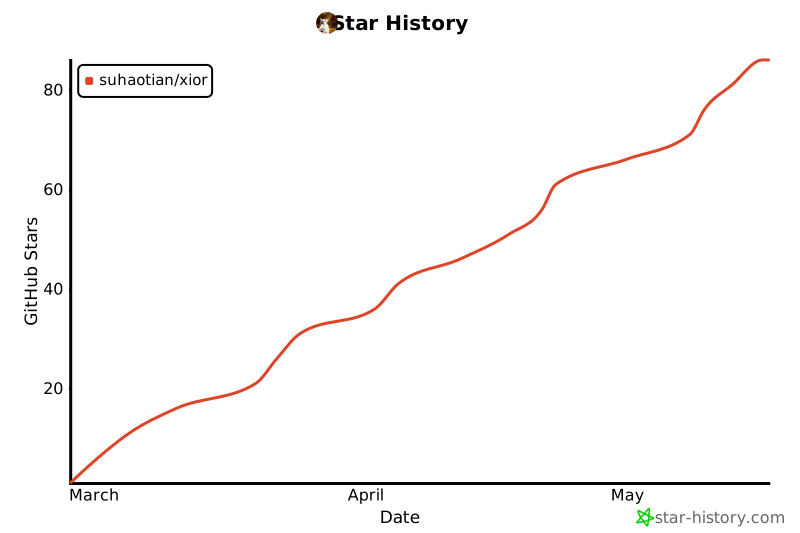](https://star-history.com/#suhaotian/xior&Date)
## Thanks
Without the support of these resources, xior wouldn't be possible:
- [axios](https://github.com/axios/axios)
- [axios-extensions](https://github.com/kuitos/axios-extensions)
- [axios-mock-adapter](https://github.com/ctimmerm/axios-mock-adapter)
- ~~[ts-deepmerge](https://github.com/voodoocreation/ts-deepmerge)~~
- [tiny-lru](https://github.com/avoidwork/tiny-lru)
- ~~[bunchee](https://github.com/huozhi/bunchee)~~ [tsup](https://tsup.egoist.dev)
- [fetch MDN docs](https://developer.mozilla.org/en-US/docs/Web/API/fetch)